
Have you ever found yourself looking at job boards in the middle of the night, wondering if Germany needs cleaners from abroad? You definitely are not alone. Maybe you picture yourself in Berlin or Munich, earning money and getting accustomed to your new environment and lifestyle. Or you are already a German citizen who just wants to earn money without having to complete a university degree for that.
The point is that the internet is full of misinformation regarding the salaries of cleaners in Germany, confusing visa regulations and suspicious job offers. All of that is unnecessary.
Why Germany Is an Emerging Market for Cleaning Jobs
First of all, you should understand the background of this situation. It is said that Germany is experiencing labor shortages. That statement is correct and works in your favor.
Germany has an aging population and a low number of young people willing to get physically exhausting jobs. As a result, there is a shortage of staff in facilities service, hospitality and health care service sectors.
Hygiene requirements became stricter due to the pandemic. All the offices, hospitals, hotels and other public buildings require cleaning. On top of that, the commercial cleaning industry (Gebäudereinigung in Germany) is considered to be one of the most stable employment sectors in the country despite the economic situation.
Therefore, you are entering the market that requires labor force, but not the market which is oversaturated. This gives you an advantage.
Read Also: Sanitation worker
Types of Cleaning Jobs Available in Germany

Let us now talk about various types of cleaning jobs in Germany so that you could decide which one suits you the most. As we already mentioned, there is no one-size-fits-all cleaning job in Germany. This sector of economy is divided into several categories.
Residential/House Cleaning Jobs
If you prefer flexible hours and direct contact with your clients, then residential cleaning job is the right one for you. Most residential cleaning jobs are mini-jobs and you will be working part-time for the household.
Commercial & Office Cleaning
This one is the most common type of cleaning job and it is the biggest employment sector in this industry. You will be cleaning offices, retail shops and other corporate buildings either in the morning or in the evening.
Hospital & Healthcare Cleaning (Klinikreinigung)
As you may guess, this type of cleaning job pays more than the regular commercial cleaning services. This is because you need to be certified and follow the hygiene protocols. If you are ready to train, this is the way to earn money.
Hotel Housekeeping Jobs
Due to the well-developed tourist industry in Germany, the hotel housekeeping remains highly demanded in cities like Munich, Hamburg and Berlin. Also, you will have the opportunity to earn money in form of tips in addition to the salary.
Industrial & Warehouse Cleaning
If you do not mind physical labor, this sector of the cleaning business pays more than residential or office cleaning. You will be cleaning warehouses, factories and logistic centers and sometimes using equipment that you will be trained to use.
How Much Do Cleaning Jobs Pay in Germany? (Salary Breakdown)
Now it is time for numbers. First of all, you need to know what to expect in terms of salary.
As it was already mentioned, your starting point will be Germany’s legal minimum wage (Mindestlohn). Then your salary will depend on the type of cleaning job you chose, your location and your certifications.
On average, you can expect the following pattern: residential and office cleaning pay slightly less than hospital and industrial cleaning.
| Job Type | Typical Pay Level | Notes |
| Residential/mini-job cleaning | Minimum wage range | Flexible hours, part-time |
| Commercial/office cleaning | Slightly above minimum | Stable shifts, full-time options |
| Hospital cleaning | Above average | Requires hygiene training |
| Hotel housekeeping | Average, plus tips | Seasonal demand |
| Industrial cleaning | Above average | Physically demanding |
Also, there will be certain regional differences. Salaries in large cities like Munich or Frankfurt will be higher than in small cities. Mainly due to the fact that the cost of living is higher. Therefore, prior to accepting any offer, it is highly recommended to check the current salaries in Germany according to Germany’s Federal Ministry of Labour and Social Affairs, as the minimum wages are constantly revised.
Do You Need a Visa? Work Permit Requirements Explained
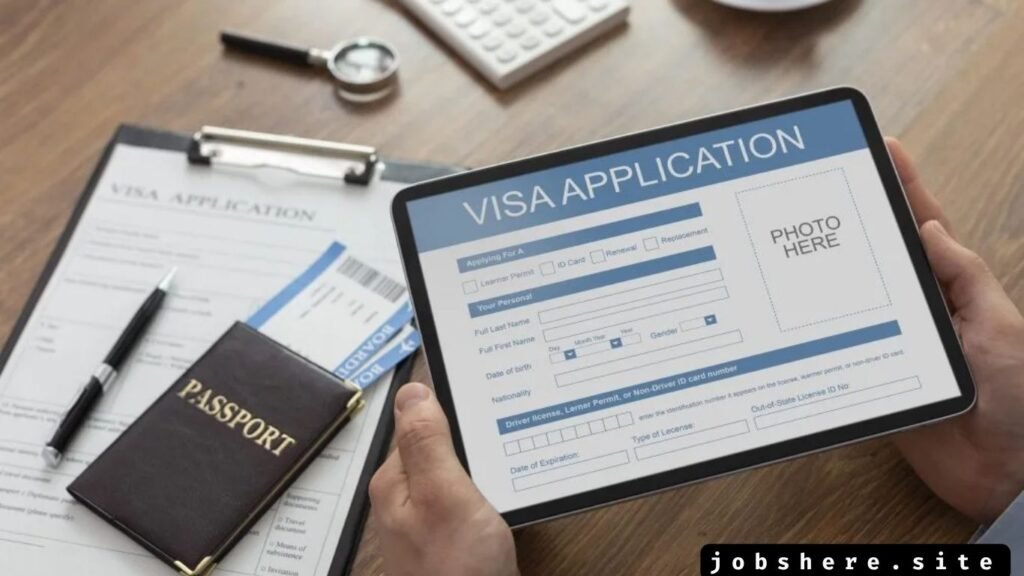
This is the point where most people fail and get lost in bureaucracy. However, it is pretty simple if you know what to do.
If you are a citizen of any EU or EEA country, then you do not need a visa at all. Freedom of movement means that you can enter Germany, start working there and register yourself locally without a separate work permit.
If you are coming from outside the EU, then the procedure will be different. Usually you will need a work visa or a Job Seeker Visa that will allow you to travel to Germany, find a job and change your status once you receive an offer of employment. Depending on your nationality, you might be eligible for the Western Balkans Regulation, which will allow you to obtain your visa easier.
But now we come to the point that you should be aware of. Not every employer in the field of cleaning sponsors visas. Usually it is done by facility management companies and staffing agencies.
To learn the latest and most accurate information about visa requirements, you can visit Germany’s official “Make it in Germany” website or Federal Foreign Office website.
Language Requirements – Do You Need to Speak German?
This is the good news for you. Entry-level cleaning jobs usually require basic German language skills – A1/A2 level. This is enough to understand safety instructions, communicate with your superiors and understand the schedule.
However, there are some international hotel chains and multinational facility companies who hire English-speaking employees. This mostly happens in larger cities.
If German language is not your native one, you shouldn not be stopped from applying for those jobs. Just be honest about your current level of language during the interview.
If you want to fasten your application process, you should spend several weeks preparing yourself and learning workplace-related vocabulary – numbers, names of the equipment and basic safety phrases.
Top Cities & Companies Hiring Cleaning Staff in Germany
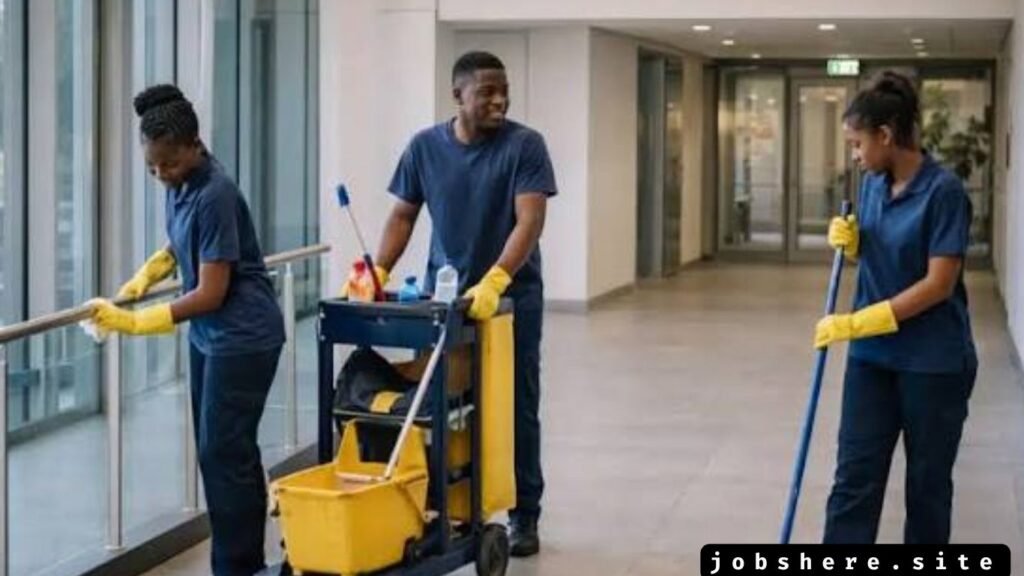
You should know where to find the vacancies. High demand in this profession is in major metro cities of Germany – Berlin, Munich, Frankfurt, Hamburg and Cologne.
Those cities have densely populated commercial zones, developed hospitality sectors and well-developed healthcare systems, which need constant cleaning.
As it was already mentioned, there is another key player in this industry – staffing agencies. They are commonly used in the field of cleaning. Many employers use Zeitarbeit (temporary work agencies) to fill their vacancies quicker and this works greatly in your favor. Working with a staffing agency allows you to get hired quicker compared to applying directly to each employer.
It is crucial for you to check if the staffing agency or the employer is registered. Simple check through the official trade register in Germany will help you with that.
Step-by-Step: How to Apply for Cleaning Jobs in Germany
There is no need for any complex strategy here. All you need is a step-by-step approach.
- Create a German-style CV (Lebenslauf). Don’t forget to add a photo if you feel comfortable about it, since it is still a common practice in Germany and try to format your work history correctly.
- Apply through verified websites. Bundesagentur für Arbeit website is the best place to start with. Also StepStone.de and indeed.de will help you.
- Apply directly to staffing and facility agencies. They move quicker and usually have contracts with multiple employers.
- Prepare yourself for a short interview. Cleaning interviews are informal and usually focus on your reliability and availability.
- Sort out visa and work permits requirements. This step depends on your nationality and you will need to do it either before or after receiving the job offer.
- Complete onboarding requirements. Some cleaning jobs require passing health and hygiene tests.
Follow these steps and you won’t get confused.
Common Mistakes & Scam Warnings to Avoid

Unfortunately, there are some scammers targeting this sector of the job market. Be cautious about any suspicious job offers that promise you visa sponsorship in exchange for any upfront fees. Legitimate employers never ask you to pay for visa sponsorship.
You should also be aware of the difference between a mini-job and full-time employment.
Finally, be very attentive when reading your contract. Pay special attention to working hours, insurance and termination clauses.
Pros and Cons of Working as a Cleaner in Germany
Every profession has its pros and cons and you should evaluate them properly to make an informed choice.
Some advantages include high demand for the job in Germany, easily accessible entry point without any formal education, opportunities for long-term employment and strong worker protections based on German labor laws.
However, there are some disadvantages as well. Physical labor, unusual working hours and learning a new language (if you didn’t do that before) are among them.
Conclusion
So, you now know that there are plenty of opportunities for cleaners in Germany and how to find your way in this industry. You now know what to expect in terms of salary, which visa pathway you should take depending on your situation and which steps you need to take in order to apply for a job.
You should not hesitate anymore. Choose one of the platforms from this article, create your CV and start sending your applications. The demand is real and your next job is waiting for you.
Also Check: UNESCO Jobs 2026
FAQs
Are cleaning jobs in Germany open to foreigners without a visa?
If you are a citizen of EU or EEA country, you can work freely without a visa. Otherwise, you will need to obtain a work visa or Job Seeker Visa, but there are some exceptions depending on your nationality.
How much do cleaners earn per hour in Germany?
Your salary will start from Germany’s legal minimum wage and will increase depending on your specialization, such as hospital or industrial cleaning and your location in Germany.
Do I need to speak German to work as a cleaner in Germany?
Basic German language skills – A1/A2 level – are useful and often required for safety instructions. However, some international companies hire English-speaking employees for their positions.
What is a mini-job and is it relevant to cleaning jobs?
Mini-job is a part-time position with limited income, which is a popular and flexible option of getting a job in Germany.
Which cities in Germany have the most cleaning job openings?
Major metro cities, such as Berlin, Munich, Frankfurt and Hamburg.